
Discover 10 jaw-dropping elephant ear varieties, care secrets, and design tricks from a pro gardener. Perfect for indoor/outdoor drama!
Hi, I’m Ashley Scott, a gardening enthusiast with 10 years of dirt-under-the-nails experience. When I first saw a Giant Red Elephant Ear unfurl its crimson-veined leaves in my Florida backyard, I was hooked. These architectural wonders aren’t just plants—they’re living sculptures. Let me share my favorite 10 varieties, growing hacks, and how to avoid the #1 mistake that kills 70% of elephant ears (spoiler: it’s not what you think).
Why Elephant Ears Steal the Spotlight
Elephant ears (Colocasia, Alocasia, and Xanthosoma) are the Beyoncés of the plant world. Their dinner-plate-sized leaves create instant jungle vibes. I’ve used them to:
- Hide an ugly AC unit in my client’s NYC balcony garden.
- Add privacy to a poolside patio in Arizona.
- Create a “wow” centerpiece for my cousin’s wedding arch.
But first—let’s debunk a myth. Many confuse elephant ears with plants like taro (edible) or Caladium (colorful but smaller). True elephant ears have thicker stems and can grow 6–9 feet tall outdoors!
10 Showstopping Elephant Ear Varieties You’ll Obsess Over
1. Giant Red Elephant Ear (Alocasia macrorrhiza ‘Red Stem’)
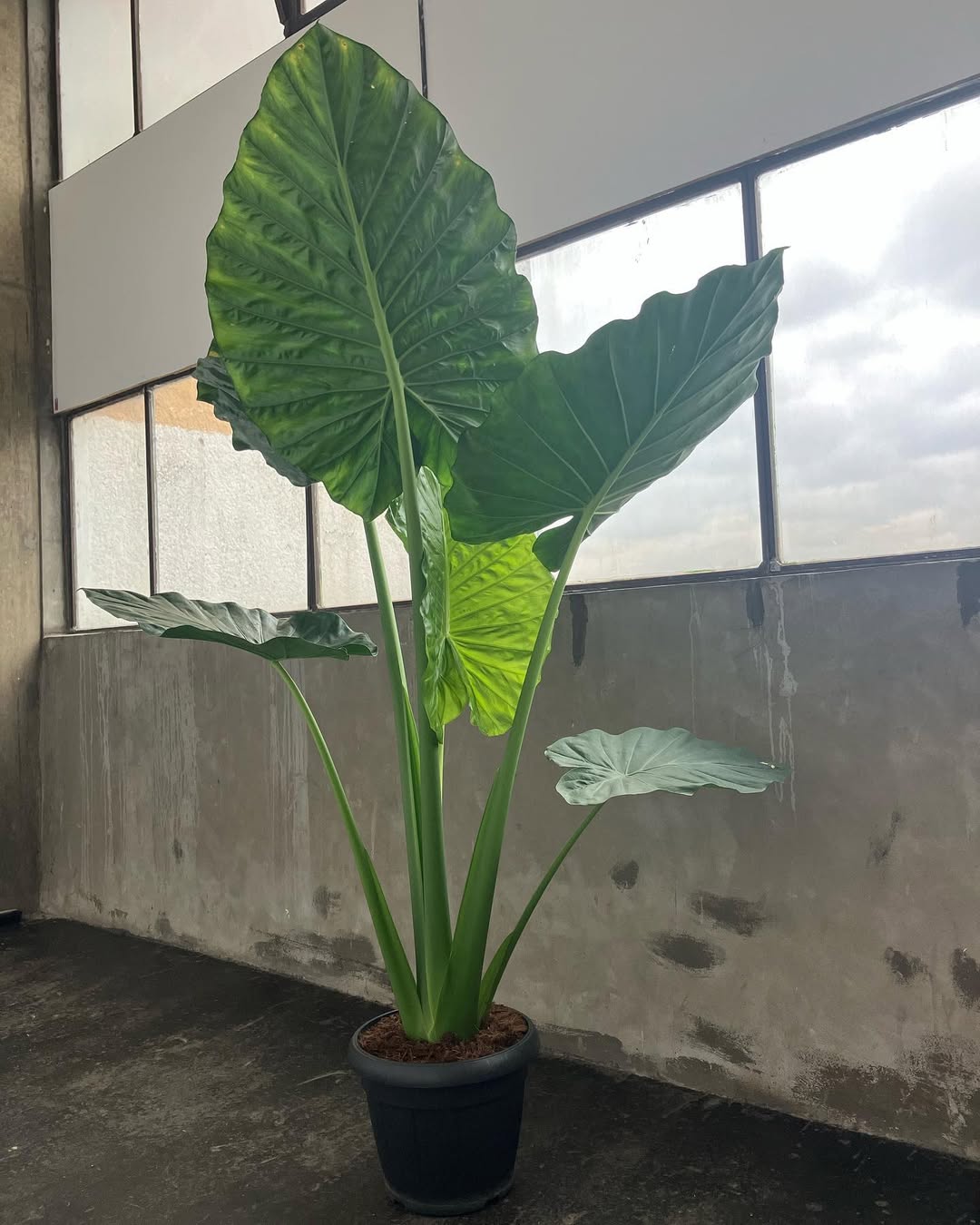
My personal favorite! Its burgundy stems contrast with emerald-green leaves. Perfect for tropical-themed gardens or as a patio statement.
2. Black Magic (Colocasia esculenta ‘Black Magic’)
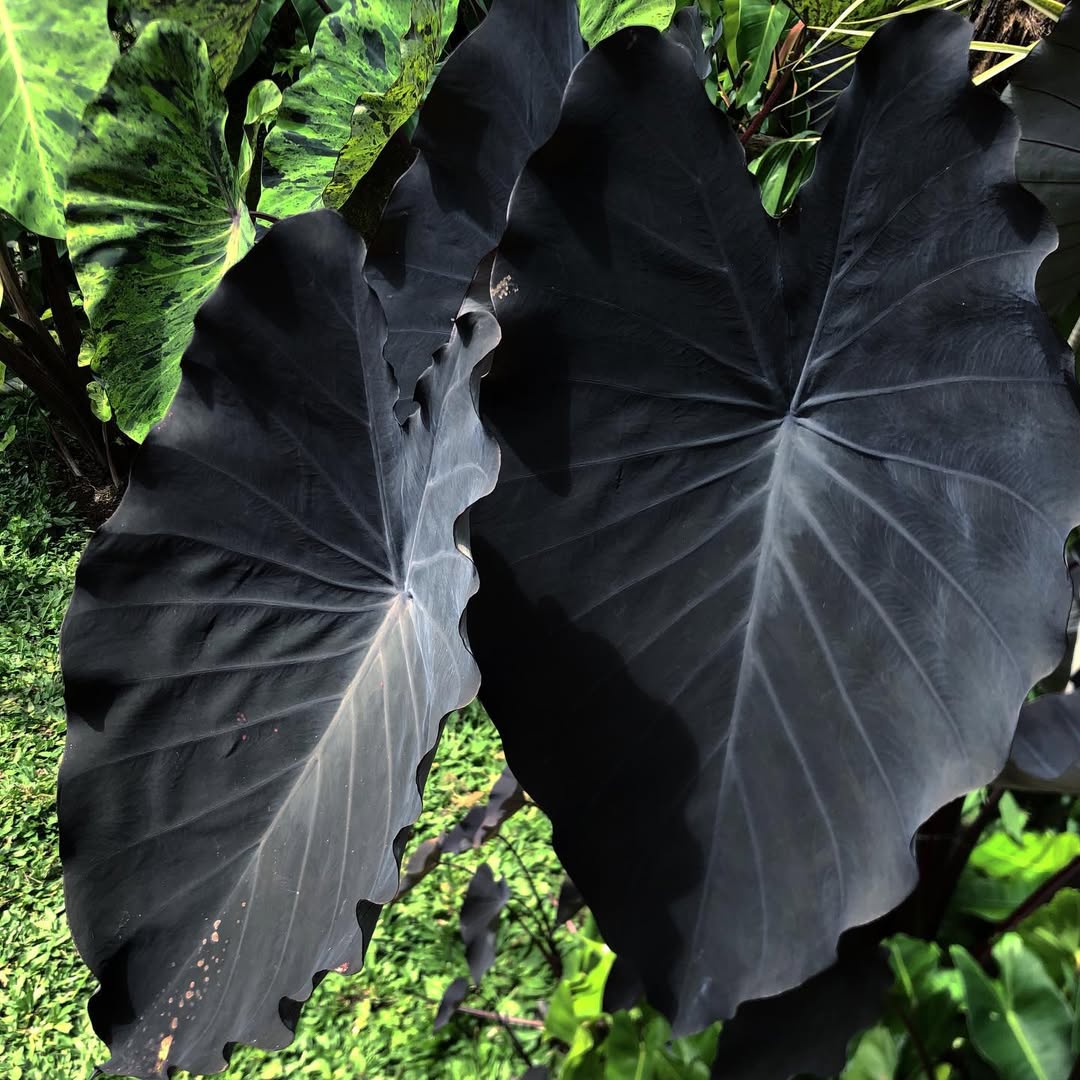
Dramatic purple-black leaves thrive in full sun. Pro tip: Pair with chartreuse sweet potato vines for contrast.
3. Mojito (Colocasia esculenta ‘Mojito’)
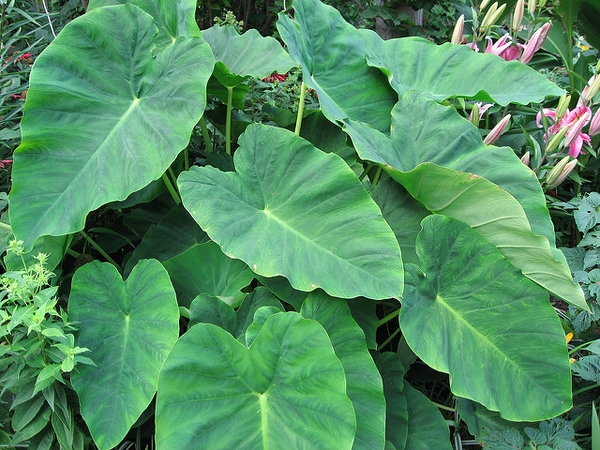 Image : NC State Extension
A fun variegated variety with speckled green-and-white leaves. I grew this in a pot with pink begonias—Instagram gold!
4. Thai Giant (Colocasia gigantea)
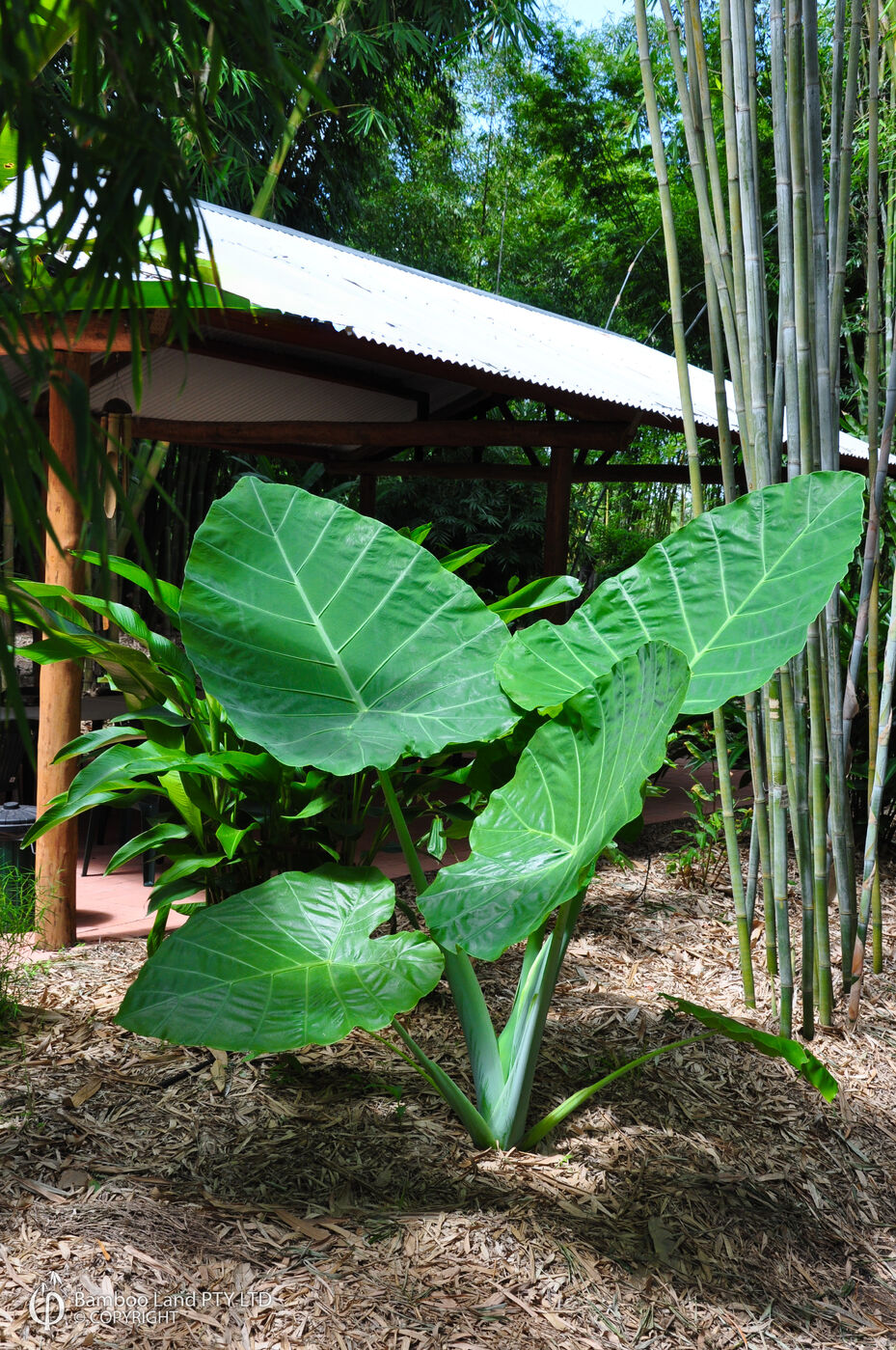 Image : Bamboo land
Leaves grow 5+ feet long (yes, really!). Needs USDA zones 8–11. Perfect for creating a rainforest vibe.
5. Pink China (Colocasia esculenta ‘Pink China’)
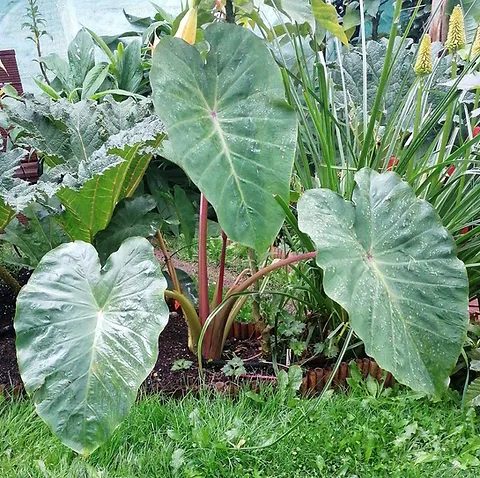 Image : exoticearthplants
Cold-hardy down to zone 6! Surprise: Its stems blush pink in cool weather. A lifesaver for northern gardeners.
6. Polly (Alocasia amazonica)
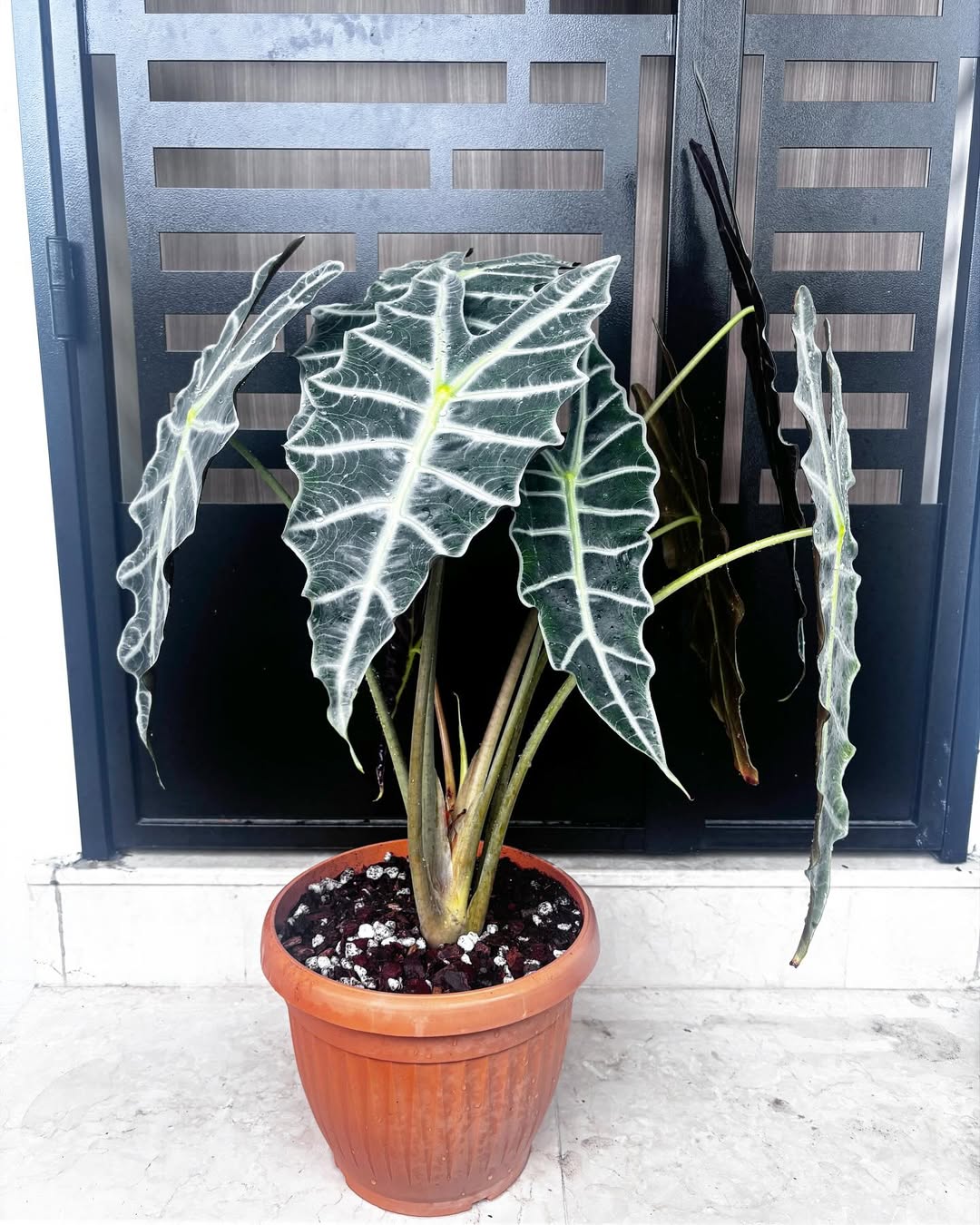
Compact and ideal for indoor spaces with its sculptural arrowhead leaves. Thrives in bright, indirect light.
7. Regal Shields (Alocasia ‘Regal Shields’)
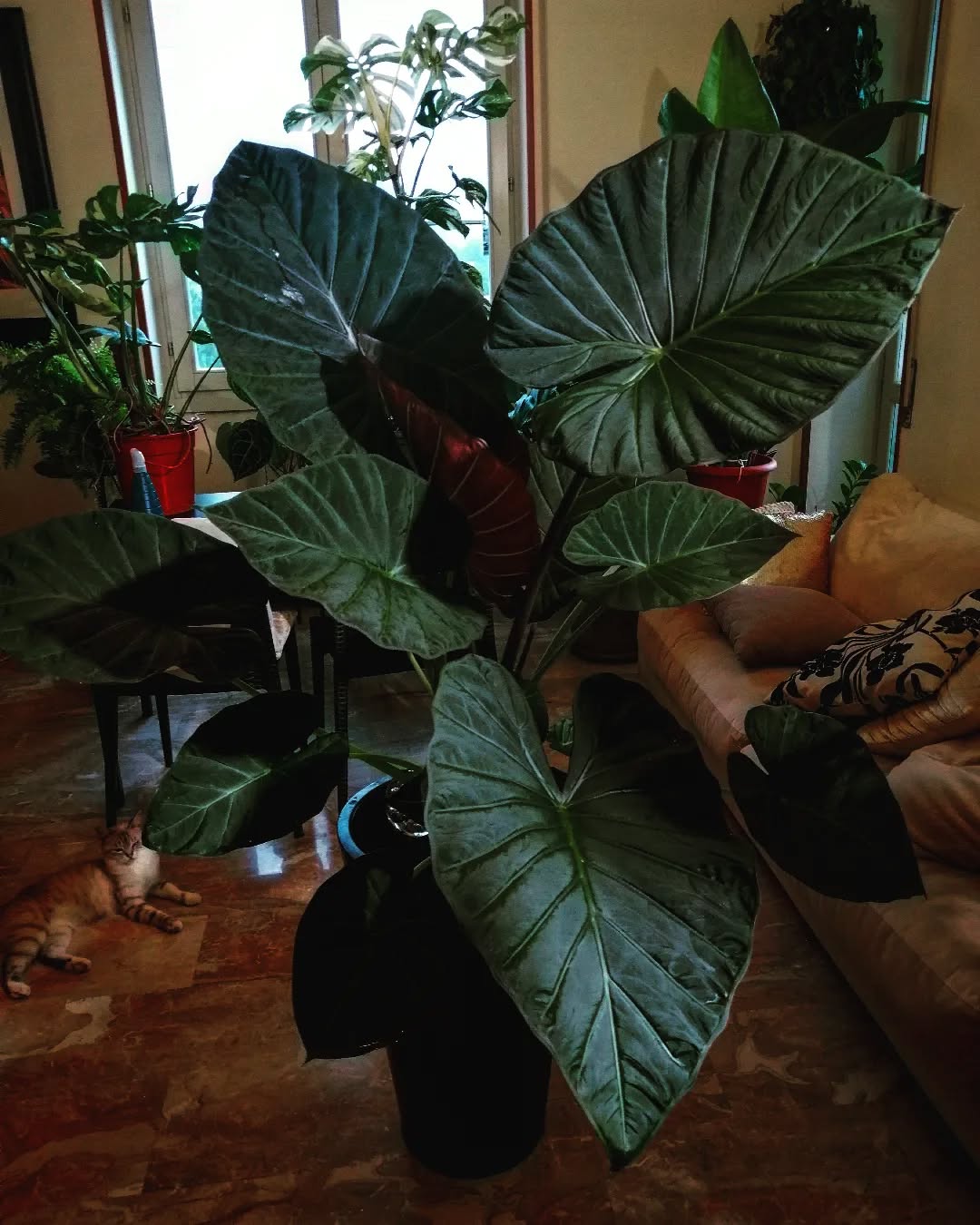
Purple undersides glow when backlit by windows. Mine doubled in size after I placed it near a humidifier.
8. Blue Hawaii (Colocasia ‘Blue Hawaii’)
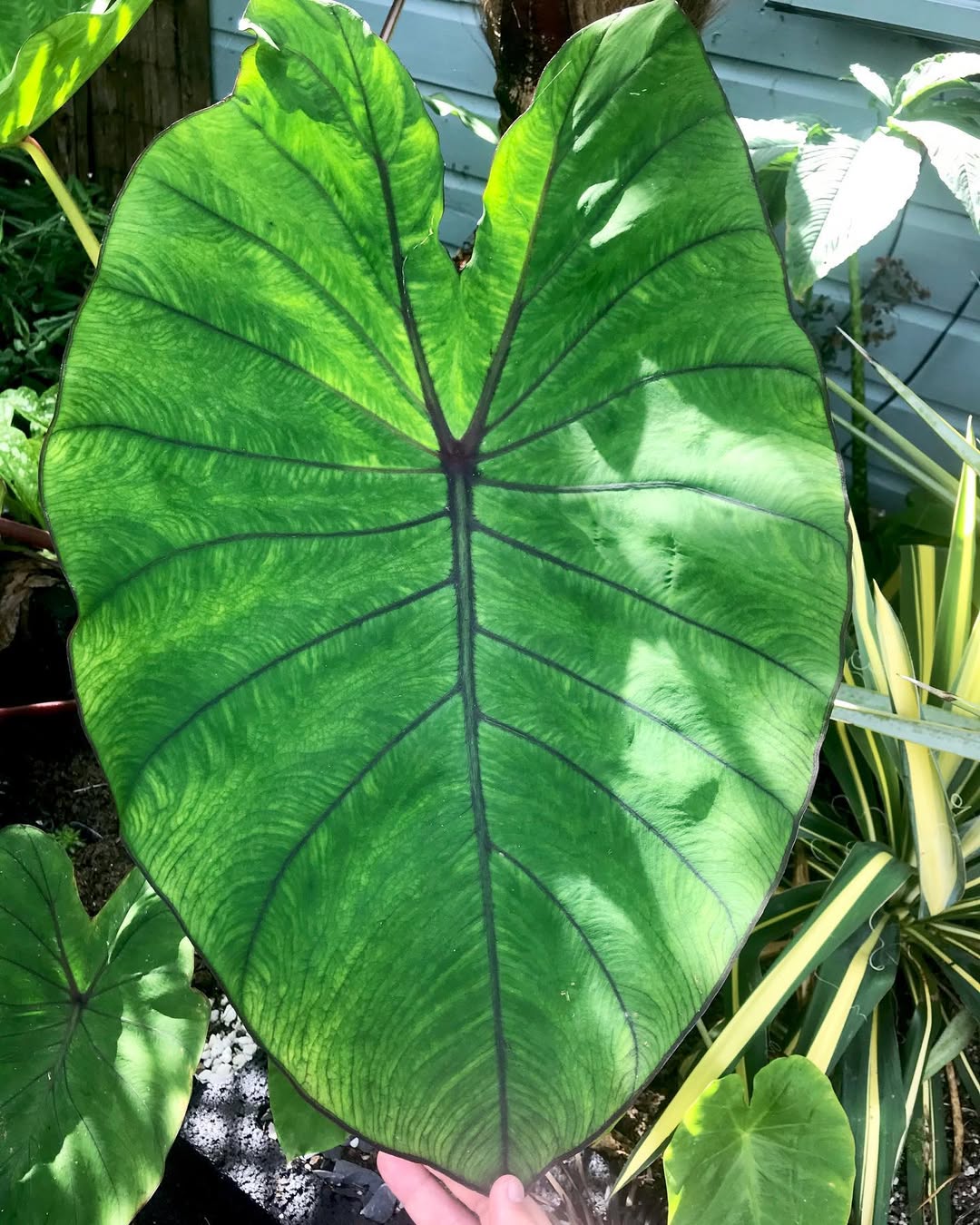
Metallic blue-green leaves with purple veins. Looks unreal in shaded garden corners.
9. Diamond Head (Colocasia ‘Diamond Head’)
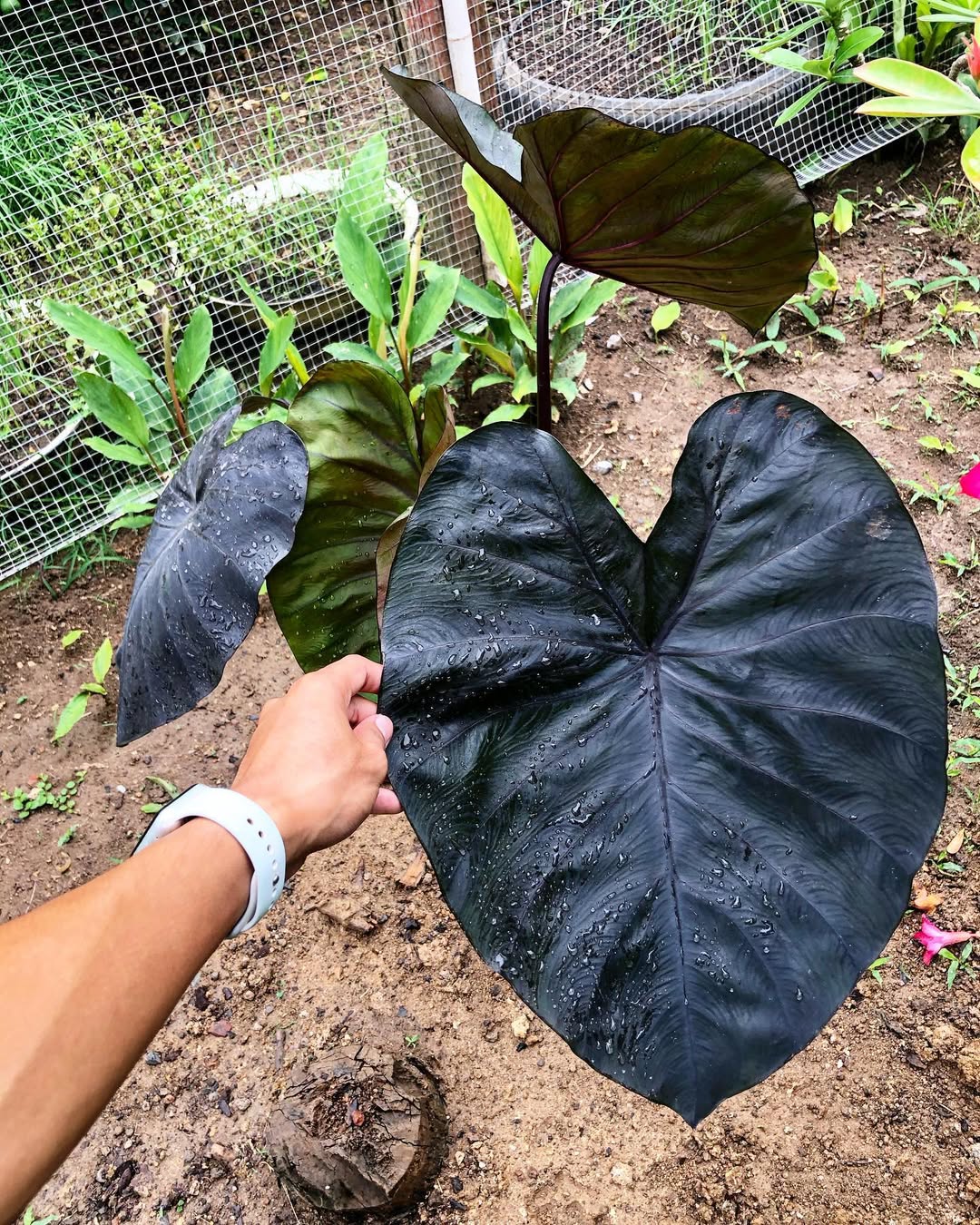
Glossy, jet-black leaves that shimmer in sunlight. My clients in Phoenix use it for modern desert landscapes.
10. Lime Zinger (Xanthosoma ‘Lime Zinger’)
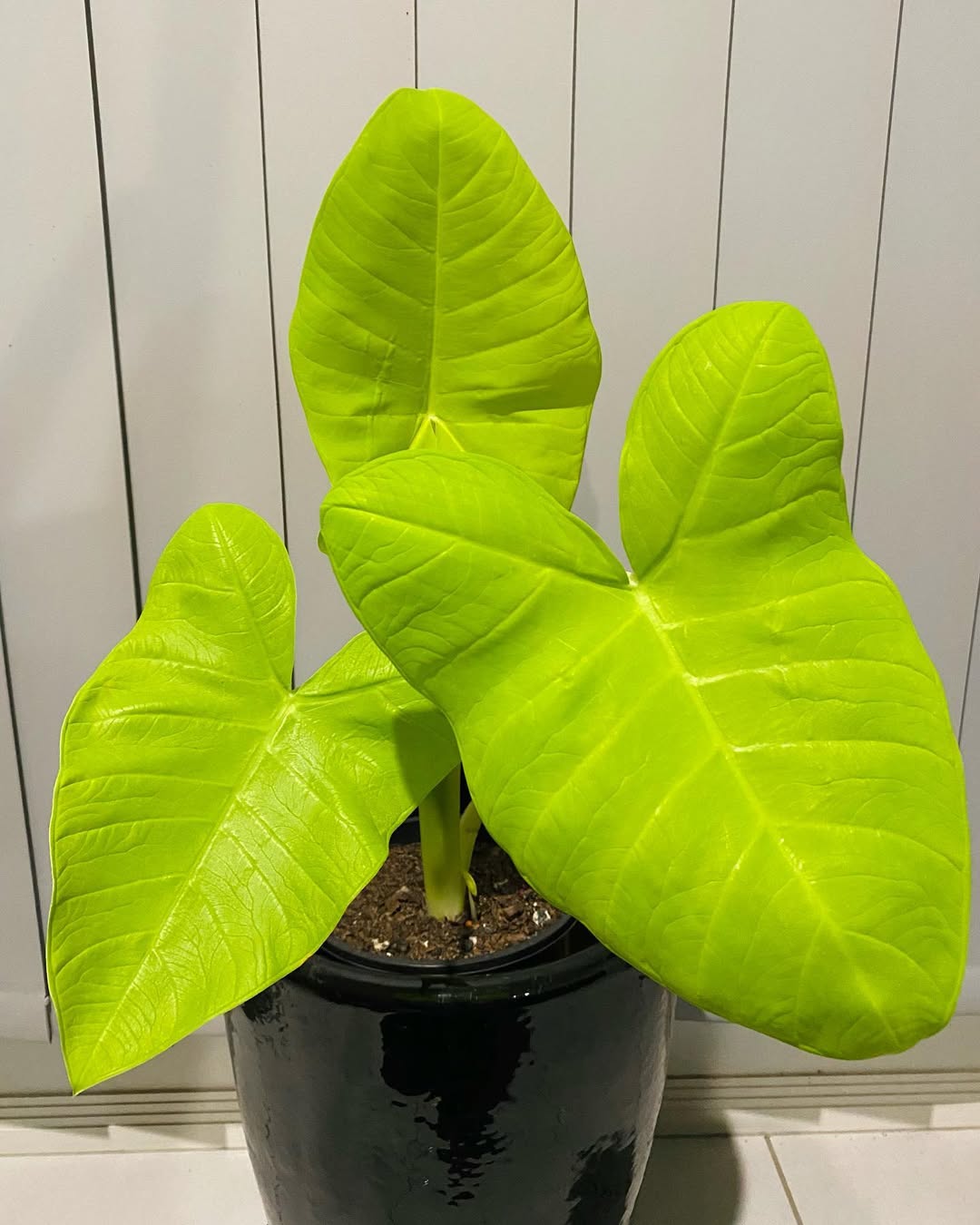
Neon-green leaves that pop against dark mulch or red brick. Great for containers or poolside plantings.
Indoor vs. Outdoor: Which Elephant Ear Works Where?
Best Outdoor Varieties:
- Thai Giant (zones 8–11)
- Pink China (zones 6–11)
- Black Magic (full sun lovers)
Top Indoor Picks:
- Polly (compact and low-maintenance)
- Regal Shields (purple undersides for drama)
My Hack: Use a humidifier for indoor elephant ears. Mine thrived once I placed one near my ‘Polly’ during dry Chicago winters.
Planting & Care: Avoid These 3 Deadly Mistakes
Mistake #1: Overwatering (The Silent Killer)
Elephant ears love moisture but hate soggy roots. I use the “Knuckle Test”: Water only when the top 2 inches of soil feel dry.
Mistake #2: Ignoring Light Needs
- Outdoor: Morning sun + afternoon shade (except ‘Black Magic’).
- Indoor: Bright indirect light. My ‘Regal Shields’ gets 4 hours of filtered east light daily.
Mistake #3: Skipping Winter Prep
In my Michigan trial, ‘Pink China’ survived -10°F when I:
- Cut back foliage after the first frost.
- Mulched with 6” of straw.
- Covered with a tarp.
(Need zone-specific tips? Check my Winter Care Guide.)
Design Ideas: Create Drama Like a Pro
1. Tropical Oasis
Group elephant ears with bird of paradise, palms, and canna lilies. Add a water feature for sound.
2. Modern Contrast
Pair black-leaved ‘Black Magic’ with white pebbles and minimalist steel planters.
3. Container Magic
Use glazed pots to highlight leaf colors. My ‘Mojito’ exploded in growth after I upgraded to a 20-inch pot with drainage holes.
FAQ: Answering Your Top Questions
Q: What do I do with the elephant ear flower?
A: Those hooded blooms (spathes) are rare indoors. Snip them off to redirect energy to leaf growth.
Q: Can I grow elephant ears in water?
A: Yes! My ‘Black Magic’ thrived in a pond’s edge. For indoor water culture, use liquid fertilizer monthly.
Q: Are they toxic to pets?
A: Unfortunately, yes. The ASPCA lists calcium oxalate crystals as harmful to cats/dogs.
Prolong the Magic: Propagation Made Simple
Last summer, I turned 1 ‘Pink China’ into 7 plants via division:
- Dig up rhizomes in early spring.
- Cut tubers with at least 1 “eye” (like potatoes!).
- Plant 2” deep in moist soil.
Bonus: Trade extras with gardening friends! I swapped a ‘Blue Hawaii’ division for a rare orchid.
Companion Planting: Pair with Roses for Sensory Bliss
While elephant ears shine solo, they pair beautifully with fragrant roses like Double Delight, Munstead Wood, or Fragrant Cloud. Imagine bold foliage against soft petals—perfection!
Final Thoughts
Whether you’re framing a backyard pond or adding jungle flair to your apartment, elephant ears deliver unmatched drama. Start with a hardy variety like ‘Pink China’, nail the watering routine, and soon you’ll be as obsessed as I am!
About Ashley Scott: A decade-long gardening addict, Ashley specializes in tropical and dramatic garden designs. Her work has been featured in Garden Design Magazine and Better Homes & Gardens. Connect with her on USA Garden Hub’s Facebook.