
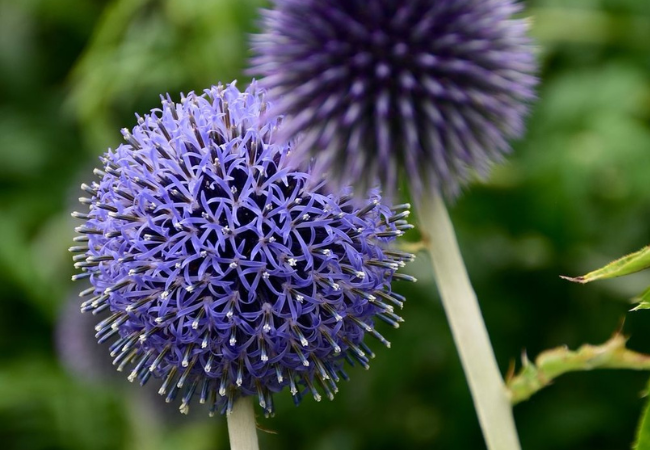
Discover how to grow Globe Thistle, a unique blue flower that looks like a spiky ball. This guide covers planting, care and tips for cultivating these eye-catching blooms across various US regions.
Have you ever seen a flower that looks like a spiky blue ball? That’s the Globe Thistle! These unique and eye-catching plants can add interesting texture and color to your garden. Let’s explore how you can grow these cool flowers.
Here’s an easy and verified chart for Globe Thistle:
CategoryDetailsBotanical NameEchinops spp.Common NameGlobe ThistlePlant TypeHerbaceous perennialHardiness ZoneZones 3-8 (depending on species)Sun ExposureFull sun to part shadeSoil TypeWell-draining, sandy to loamy soilWatering NeedsLow to moderate; drought tolerant once establishedGrowth HabitUpright, clump-formingHeight/Spread2-5 feet tall, spread of 1-3 feetSpecial FeaturesSpiky, globe-shaped flowers in shades of blue or white; blooms in summer; attracts pollinators like bees and butterflies; deer resistant; suitable for cutting and drying
What is Globe Thistle?
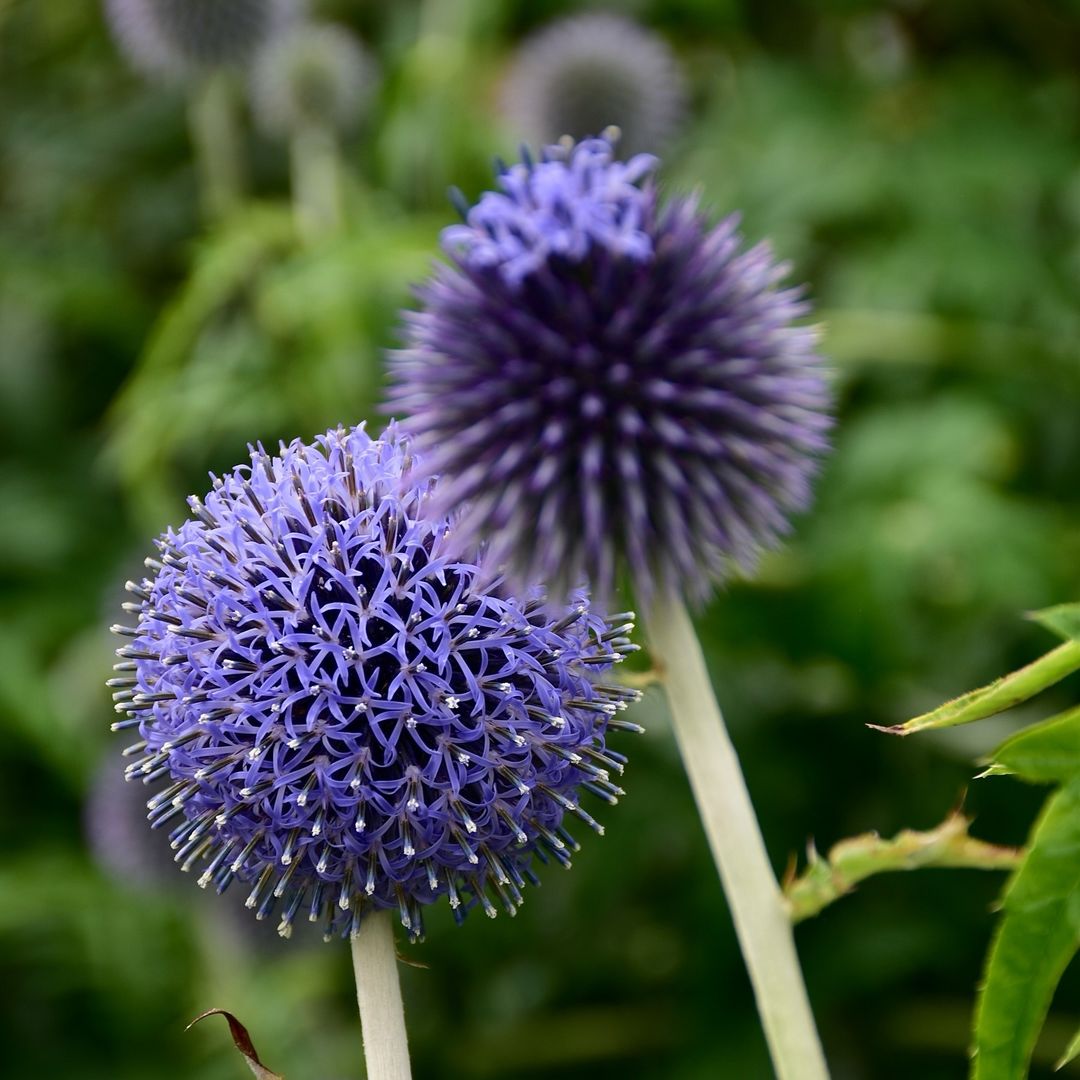
Globe Thistle, or Echinops, is a plant known for its round, blue flower heads. Despite its name, it’s not actually a thistle. The flowers look like spiky balls and can be up to 2 inches wide.
For a detailed botanical description, check out the USDA Natural Resources Conservation Service plant guide.
Why Grow Globe Thistle?
- Unique, eye-catching blue flowers
- Attracts bees and butterflies
- Drought-resistant once established
- Great for dried flower arrangements
How to Plant Globe Thistle
When to Plant:
Plant Globe Thistle in spring or fall. To find the best planting time in your area, use the USDA Plant Hardiness Zone Map.
Where to Plant:
Globe Thistle loves full sun. Choose a spot that gets at least 6 hours of direct sunlight daily.
Soil:
These plants prefer well-draining soil and can tolerate poor soil conditions. Learn more about soil types from the University of Minnesota Extension.
Planting Steps:
- Dig a hole as deep as the root ball and twice as wide
- Place the plant in the hole at the same depth it was in its container
- Fill with soil and water well
Caring for Your Globe Thistle
Water:
Water regularly until established. After that, Globe Thistle is quite drought-tolerant.
Fertilizer:
Globe Thistle doesn’t need much fertilizer. Too much can make them grow too tall and floppy.
Pruning:
Cut back the stems to about 6 inches in late fall or early spring.
Winter Care:
Globe Thistle is hardy in most of the USA and doesn’t need special winter care.
Common Problems and Solutions
- Powdery Mildew: This fungal disease can appear in humid conditions. The University of California Integrated Pest Management Program offers advice on managing powdery mildew.
- **Leaf Miners: **These pests can damage leaves. Learn how to control them from the Colorado State University Extension.
- Self-Seeding: Globe Thistle can spread easily. Remove unwanted seedlings to control its growth.
Different Types of Globe Thistle
- Echinops ritro: The most common type, with steel-blue flowers
- **Echinops bannaticus: **Has larger flower heads and leaves
- Echinops sphaerocephalus: Features white or pale blue flowers
For more information on Globe Thistle varieties, visit the Missouri Botanical Garden’s plant finder.
Interesting Facts About Globe Thistle
- The name “Echinops” comes from Greek words meaning “hedgehog” and “appearance”
- Globe Thistle is native to Europe and Asia
- The flowers are actually made up of many tiny florets
Growing Globe Thistle in Different Regions
Globe Thistle can be grown in most parts of the USA:
- In hot, dry regions (like the Southwest), it thrives with minimal care
- In humid areas (like the Southeast), ensure good air circulation to prevent fungal issues
- In colder regions (like the Northeast), it’s hardy and doesn’t need winter protection
For region-specific gardening advice, check out the Cooperative Extension System website.
Using Globe Thistle in Your Garden
- In perennial borders
- As a focal point in rock gardens
- In pollinator gardens
- For dried flower arrangements
For more ideas on garden design, visit the National Gardening Association website.
Globe Thistle is a unique and interesting plant that can add a touch of whimsy to your garden. Its spiky blue flowers are sure to be a conversation starter and its low maintenance needs make it a great choice for many gardeners. Why not add some of these blue spheres to your garden this year?
For more gardening tips and plant care guides, visit usagardenhub.com.